The Odyssey
He already won the war by the time the film starts. Getting home is where it costs him everything.
Christopher Nolan's The Odyssey opens with a man who has already won, and spends almost the entire film making sure he never feels like he did.
Troy has fallen. The horse worked. Odysseus found the solution nobody else could, hid soldiers inside a wooden structure, convinced the enemy to drag it through their own gates, and turned supposedly impenetrable walls into decoration. By every measure the ancient world respected, he is the smartest man to survive the war. None of that looks particularly glorious on Matt Damon's face once the city is actually burning.
That might be the best thing Damon does in the film. Not the swordwork or the speeches, but the expression of a man who got exactly what he wanted and is only now discovering what wanting it cost everybody else. Odysseus used his intelligence to accomplish something extraordinary, and now has to look directly at what that intelligence accomplished. A civilization collapses because he found the answer.
That part hit me harder than I expected. There is something deeply uncomfortable about watching somebody succeed so completely and then look almost disappointed by the result. We usually imagine regret following failure. Watching Odysseus stand inside the consequences of his own victory made the opposite feel much worse. He did everything right according to the logic of war, and somehow that is exactly the problem.
The film keeps returning to that contradiction. Odysseus is brilliant, observant and almost pathologically capable of finding his way out of situations that should kill him. Unfortunately, being the smartest man in Greece does not prevent you from occasionally behaving like the dumbest man on the boat.
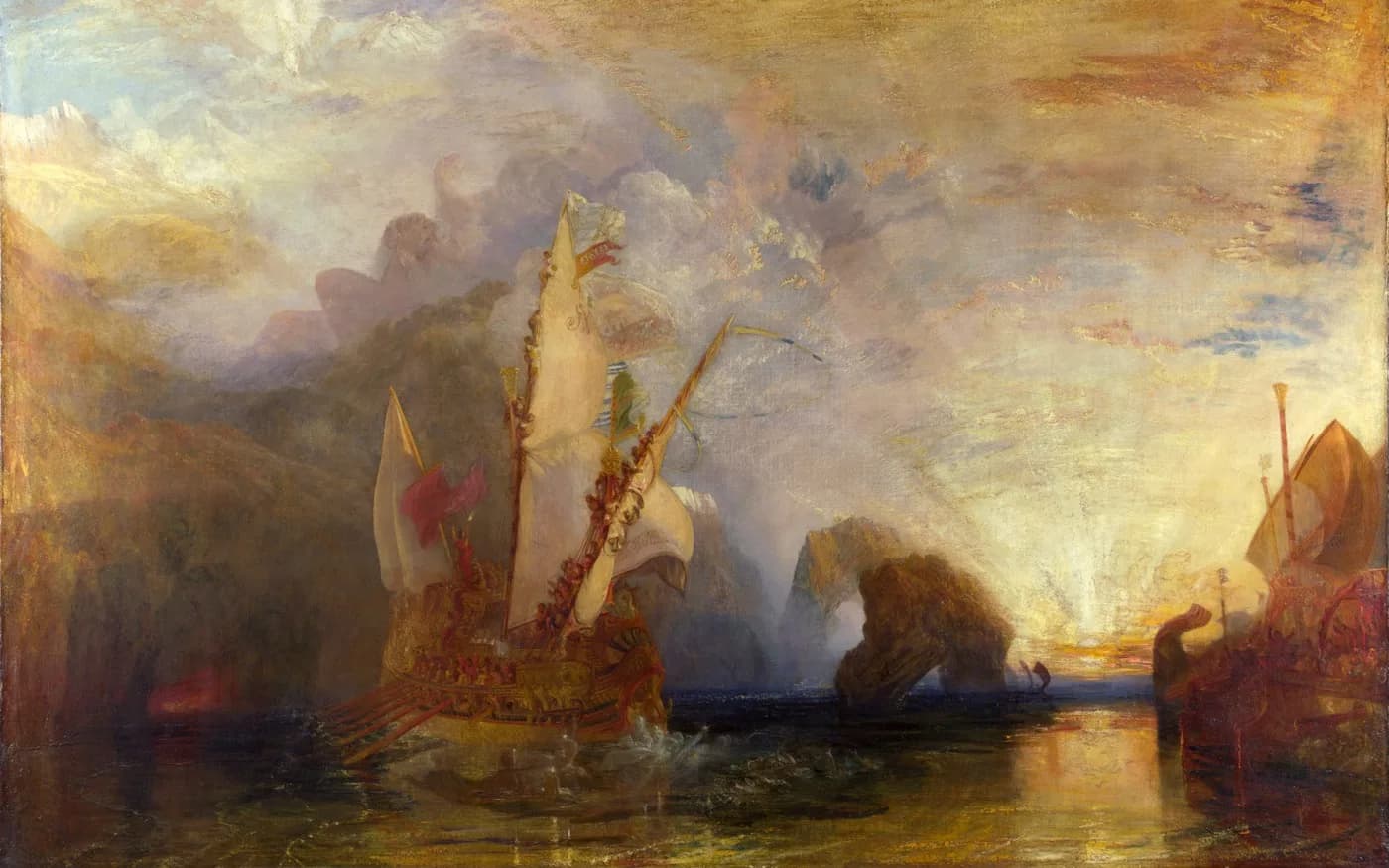
The Cyclops makes this obvious. Odysseus survives, blinds the creature and gets his men out. At this point the appropriate response would be to leave quietly, appreciate that the universe has temporarily stopped trying to murder you, and perhaps never speak of the incident again.
Odysseus instead turns around and announces who he is.
Of course he does.
He cannot merely defeat something. It has to know who defeated it. It is the ancient Greek equivalent of escaping a dangerous situation and then posting your live location because you need the other guy to understand who won. You can practically see the consequences forming while he is still shouting.
That pride costs him, but the more interesting part of Odysseus is that pride is not even his most dangerous quality.
Curiosity probably is.
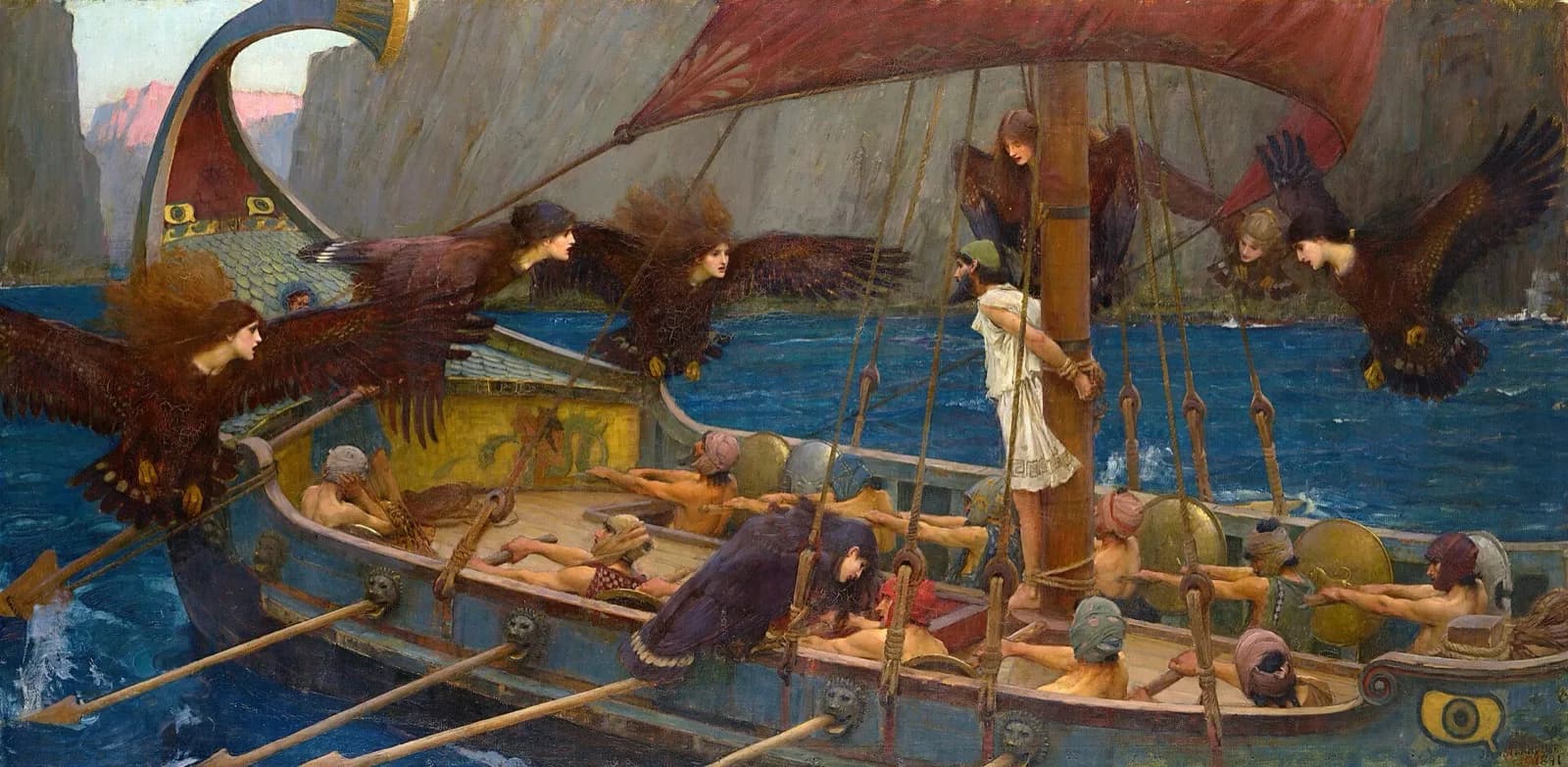
The Sirens might be the scene that explains him better than anything else in the film. Everybody knows the rule: do not listen. His crew gets the sensible solution. Their ears are blocked. Odysseus chooses something considerably more Odysseus.
He orders them to tie him to the mast because he does not merely want to survive the Sirens. He wants to hear them.
That detail says almost everything about him. He understands his own weakness well enough to know that willpower will not save him, but curiosity still refuses to let him walk away. So instead of trusting his future self, he engineers restraints around him. Tie me down, ignore whatever I say later, and assume I am about to become extremely persuasive and extremely stupid.
There is something surprisingly modern about that. Human beings love pretending that knowing something is bad for us gives us control over wanting it. Usually it just means we can explain the bad decision much more intelligently while making it.
The Sirens are dangerous precisely because Odysseus understands the danger and still needs to know. The same curiosity that makes him exceptional also keeps dragging him toward things a sensible person would leave alone.
By the time the journey closes in on Ithaca, most of what Odysseus left Troy with has been stripped away. His army is gone. His crew is almost gone. The glory of winning the war means very little now, and his belief that intelligence allows him to control outcomes has taken serious damage.
What remains is much simpler. He wants to go home.
Home is Penelope, played by Anne Hathaway. Home is Telemachus, played by Tom Holland. Home is also a kingdom that has spent years learning how to exist without him.
That last part matters. Ithaca was not frozen in place waiting for him to finish his adventure — Penelope, Telemachus and the order of the kingdom all moved on without him, and Odysseus himself is obviously not the man who originally left.
There is something cruel about spending years idealising a place and then discovering that the version you wanted only really exists in memory. Home kept going without him. So did the people inside it, and so did he.
Robert Pattinson's Antinous has become particularly comfortable in that absence. He carries himself like a man who's been inside somebody else's house long enough to start treating the furniture like his problem. At one point he wants the beggars removed.
Reasonable enough, until you remember the beggar standing in the house is actually its owner.
Batman has unfortunately failed the background check.
That disguise sets up what might be the film's neatest structural idea. Odysseus conquered Troy by hiding himself inside something, and returns to Ithaca by doing exactly the same thing. At Troy, the horse lets him enter his enemy's home. At Ithaca, the beggar lets him enter his own.
The instinct is identical. The purpose is completely different.
One deception destroys a civilization. The other gives him a chance to rebuild a household.
By the time he finally reveals himself, the violence has accumulated years of pressure behind it. These men have been eating his food, occupying his home, pressuring his wife and threatening his son. Meanwhile the man they've reduced to a historical rumour has spent years surviving storms, monsters, gods, temptation, and what can only be described as the worst journey home ever booked.
Then he walks back into the room.
The final fight is also one of the few places where the film suddenly feels more like a movie than something physically happening in front of you. Earlier, the sea has weight. Troy feels hot and dirty. The men on those ships look genuinely small against the world around them. Then Odysseus starts clearing the hall and the camera begins finding angles no camera should reasonably be finding while that many people are dying.
Oddly, I do not think that hurts the ending. The entire film has been about a man staging reality until other people see what he needs them to see. The horse is a performance. The beggar is a performance. Even the way Odysseus uses his own name becomes part of how he constructs himself.
So when his final victory begins to feel almost theatrical, it fits. He has spent the whole story manipulating appearances until the world finally gives him an opening.
And then the film gives him Penelope.
Their reunion is the moment that got me.
Not because it is particularly grand. Almost the opposite. After everything Nolan has thrown at him, Odysseus finally reaches the person who represented home while he was everywhere else, and for a few seconds he stops looking like a king, a soldier or the cleverest man in Greece. He just holds her.
That simplicity did more to me than another enormous set piece probably could have.
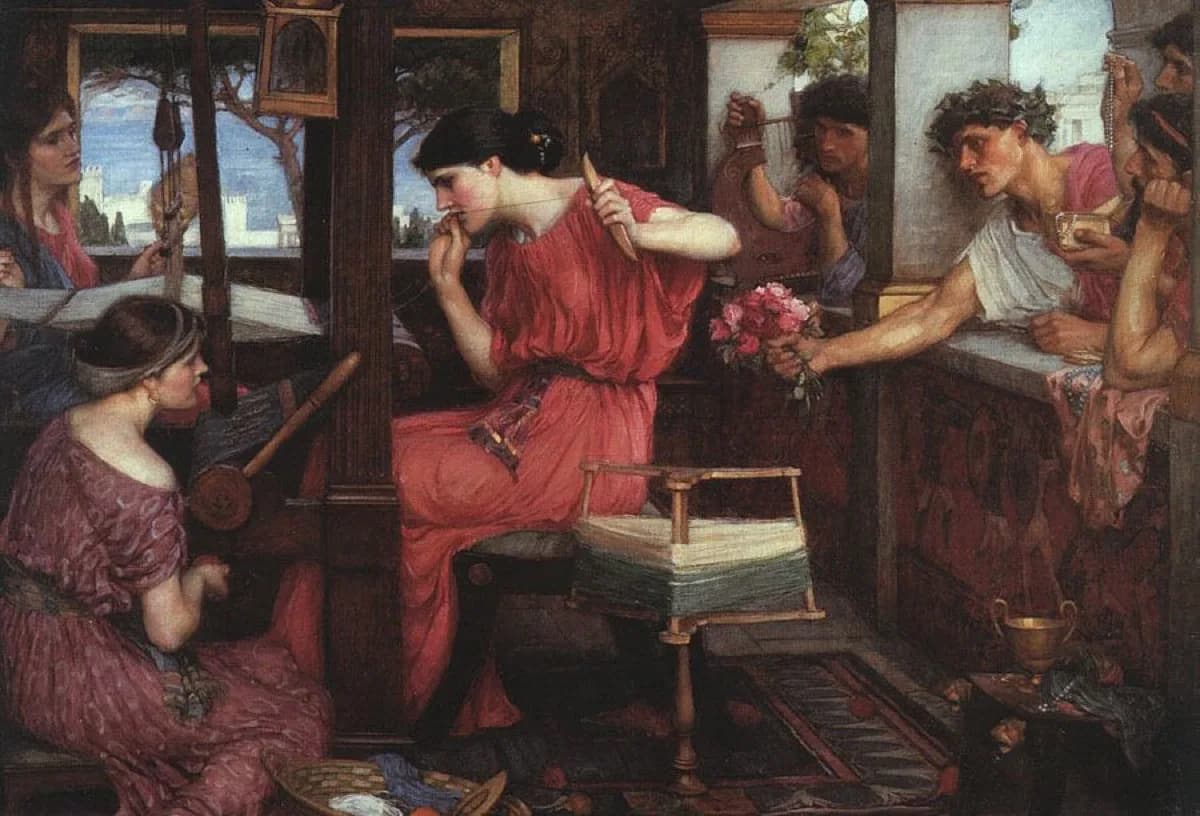
Anne Hathaway also makes waiting feel active rather than passive. Penelope has spent years defending the idea that something is still worth preserving while surrounded by men whose entire future depends on convincing her it is not. So when Odysseus finally reaches her, the relief feels almost unfairly temporary.
Because the film does not let him stay there.
He still has obligations. Still has consequences. Still has distant places waiting for him.
That is what made the reunion feel less like a reward to me and more like a curse with a few minutes of mercy inside it. Odysseus finally touches the thing he has been surviving for, only to discover that returning home and being allowed to remain there are not the same thing. Leaving again almost feels like coping through movement. If he keeps travelling, perhaps he never has to sit completely still with what Troy, the journey and getting home actually cost him.
That is ultimately why The Odyssey works for me.
The spectacle is enormous, but the spectacle is not really the point. Nolan can build the ships, burn Troy, drag IMAX cameras across half the planet and presumably make several insurance companies extremely nervous. Underneath all of that is a much simpler story about a man discovering the limits of the thing he trusted most about himself.
Odysseus believes intelligence can get him through the world, and sometimes it can. It wins him a war. It saves him from impossible situations. It lets him manipulate people and creatures stronger than him.
But intelligence does not stop pride. It does not remove desire. It does not guarantee obedience. It cannot prevent regret, and it definitely cannot stop you from shouting your own name at a Cyclops after you have already escaped.
There are some problems even the smartest man in Greece cannot think his way out of.
Maybe that is why the story still works thousands of years later. Our ships are better, our maps mostly work, and if somebody starts hearing irresistible voices coming from the ocean there are probably several professional interventions before we tie them to a mast. But curiosity is still curiosity. Pride is still pride. Home is still home.
Troy needed Odysseus at his smartest.
The cruel part is that everything after Troy asks whether being smart was ever enough.