One Battle After Another
Everyone in this movie needs to calm down. Thankfully, none of them do.

Contains spoilers.
Something swept the 98th Academy Awards™, and for once the cameraman had an actual reason to keep pointing at Leonardo DiCaprio instead of doing it because the Oscars constitution presumably requires one Leo reaction shot every fourteen minutes.
One Battle After Another arrives with roughly the subtlety of somebody kicking your front door open.
Huge production. Paul Thomas Anderson. Leonardo DiCaprio. Sean Penn. Benicio del Toro. Regina Hall. Teyana Taylor. Chase Infiniti.
At some point you stop calling that a cast and start wondering whether Warner Bros. accidentally booked the entire building.
And yet the thing I liked most about the movie isn't really its scale.
It's how embarrassingly human everyone becomes underneath it.
For a movie filled with enormous personalities, dramatic confrontations and people behaving as though every room they enter has immediately become historically significant, One Battle After Another eventually becomes a surprisingly intimate movie about people having to deal with who they used to be.
Which is much more interesting than watching cool people do cool things for three hours.
Because these people are absolutely not cool.
They just think they are.
And PTA knows it.
The movie constantly allows its characters to construct these enormous identities around themselves and then quietly pokes holes in them.
Even the names sound like somebody opened a random-word generator after three drinks.
French 75.
Christmas Adventurers Club.
Steven J. Lockjaw.
Steven J. Lockjaw.
I need to repeat that.
Imagine surviving childhood, school, adulthood, taxes and presumably several government forms and eventually deciding that Steven J. Lockjaw is the name with which you will strike fear into mankind.
Sean Penn somehow makes it work. Actually, Penn makes it work so aggressively that twenty minutes later you almost forget how stupid the name is.
Then somebody says "Lockjaw" again.
And there it is.
His performance might be my favourite thing in the movie. Penn doesn't just play a tough guy. He plays a man who desperately needs everyone in a six-mile radius to know that he's the tough guy.
There's a difference.
You can practically see the machinery operating underneath him. The posture. The walk. The expressions. The way he speaks. Everything about the man seems carefully engineered to communicate: I am a very serious person.
Which naturally makes him incredibly funny. He's intimidating, ridiculous and somehow believable at the same time. Go slightly further and you've made Austin Powers. Pull back and you've made a villain who whispers every line because evil apparently destroys your indoor voice first. Penn lands directly in the sweet spot.


And then there's Leo.
Saying Leonardo DiCaprio acted well at this point feels like reporting that the sun successfully completed another sunrise. Yes. Good work everyone.
But Bob Ferguson gives him something I found much more interesting than another huge dramatic performance.
What got me wasn't loud Bob. It was watching him settle.
There's something genuinely beautiful about seeing someone who once organised his entire identity around intensity gradually get pulled toward something much simpler.
Being a dad.
People discuss character development as if humans receive software updates, so we may as well commit to it.
Bob Ferguson 1.0: chaos. Bob Ferguson 1.4: consequences. Bob Ferguson 2.0: Dad Edition.
Patch notes: Reduced certainty. Increased worrying. New passive ability: asking where your daughter is every nine minutes. Critical vulnerability added: daughter.
The important part is that fatherhood doesn't magically turn Bob into some enlightened old man. He's still Bob. He's just Bob with somebody else to lose. And that changes everything.
DiCaprio sells that transition without making a ceremony out of it. There isn't a scene where Bob watches the sunset while a piano gently informs us that Personal Growth™ has been unlocked. It happens through behaviour. Slowly, this guy who used to have his attention pointed everywhere starts organising his entire world around one person.
Willa.
That's where the movie gets its heart.
Because the older I get, the less interesting I find characters who are supposedly fearless. Fearless characters sound impressive until you realise fearlessness usually means one of two things: fictional, or stupid. Give somebody something they genuinely love and bravery suddenly becomes much more interesting.
Bob isn't compelling because he stops being afraid. He's compelling because eventually he has an enormous reason to be afraid.
Willa.
The possibility of losing her hangs over him differently from everything that came before. And once you understand that, his relationship with his own past becomes heavier too.
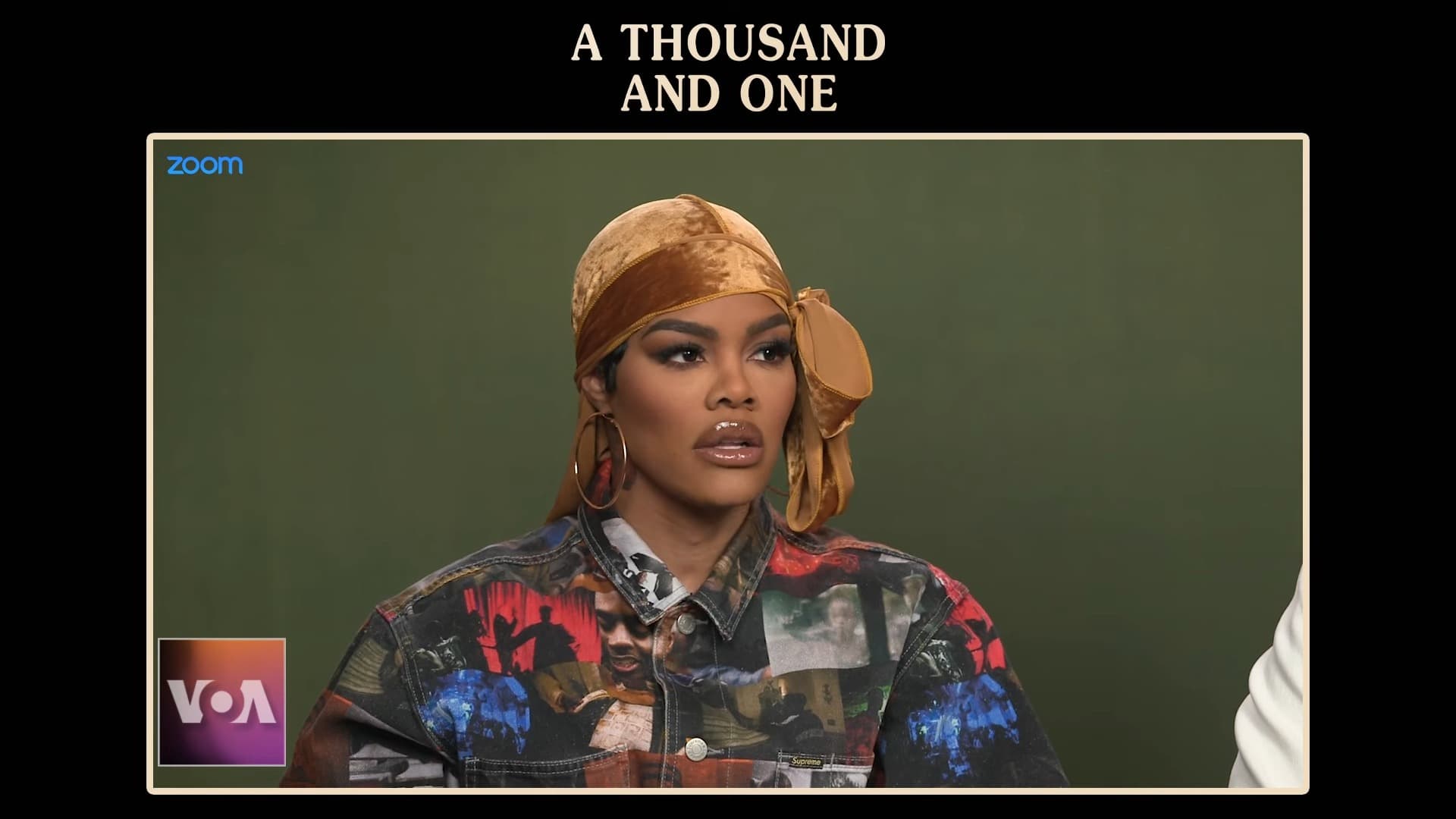
Perfidia, Willa's mother and Teyana Taylor's firestorm of a character, isn't simply "the woman from before." She's part memory, part guilt and part unfinished conversation permanently occupying premium real estate inside Bob's head without paying rent.

Which, unfortunately, is probably one of the more realistic things in the movie. People don't actually close chapters properly. That's something movies lie about. We don't sit beside a lake, accept the past, smile gently and move forward while an indie song begins playing.
We stop thinking about something. Then somebody says six completely ordinary words at 11:43 PM on a Tuesday and suddenly your brain has restored a backup from 2019.
Excellent. Thank you.
Bob carries that feeling throughout the movie. And eventually Willa inherits some of it. That's where Chase Infiniti becomes especially good.
Discovering something important about your parents is strange because technically nothing has changed. Same person. Same room. Same face. Except your entire internal file on them has now been corrupted.
You start replaying old memories. That weird thing they once said? Wait. That argument you weren't supposed to hear? Oh no.
Suddenly you're performing forensic analysis on your own childhood. Congratulations. Your family has lore.
And Willa receives an unreasonable amount of lore.
This is where the Bob–Perfidia–Willa relationship becomes much more interesting to me than the giant spectacle surrounding it. It's basically about inheritance. Just not the fun kind. Not land. Not the car your dad finally hands over.
Emotional inheritance. Parents handing their children unresolved pieces of themselves. Mistakes. Secrets. Fear. Guilt. Things nobody dealt with properly because apparently every generation believes the next one will have more free time.
Most parents hope their children inherit the house. Willa inherits a cinematic universe.
What actually stayed with me is the retrospective part of it. Sitting there afterward thinking about the one thing you could have said years ago that might have changed everything, and knowing you didn't say it, and knowing PTA isn't going to let you off the hook for that the way most movies would. That's not a plot point in the film. That's just what the film leaves you carrying out of the theater.
And underneath all of this, PTA keeps the movie funny. That surprised me. The humour rarely stops the movie, points toward itself and waits for applause. Modern blockbusters sometimes behave like insecure people telling a joke at dinner: they say the joke, nobody reacts fast enough, so they explain the joke, and then the soundtrack confirms that yes, everyone, that was in fact the funny part.
PTA mostly trusts you. A ridiculous name can simply exist. A person can act completely seriously while everything surrounding them becomes increasingly absurd. And DiCaprio is especially good at that kind of comedy.
Some actors visibly enter comedy mode. Leo mostly just looks exhausted. The man has developed one of cinema's finest facial expressions for: I cannot believe these idiots have made this my problem. A facial expression which, incidentally, becomes more useful every year you're alive.
The movie isn't perfect. Sometimes the scale starts overwhelming the humans inside it. There are names, relationships, histories and moving pieces coming at you quickly enough that certain stretches feel less like watching a film and more like being added to a WhatsApp group halfway through an argument.
You open it. Seventeen unread messages. Someone has left the group. Someone has been added back. One person is furious. Another has replied "👍". There is clearly six years of context involved. Nobody will explain anything. Good luck.
But weirdly, that confusion sometimes helps. Because real relationships look exactly like that from the outside. You meet somebody and they've already got twenty years of history operating in the background. Old grudges. Old love. Old jokes that aren't funny to anyone except three people. Relationships make perfect sense to the people inside them and look completely insane to everybody else.
One Battle After Another understands that.
Strip away the noise and it eventually comes back to something surprisingly ordinary. People have to live with themselves. Not the heroic version. Not the version that sounded excellent at twenty-five. The actual person left standing once everything exciting is over.
That's why Bob worked for me. That's why Willa worked for me. That's why Perfidia occupies so much space even when she isn't physically there. And somehow that's also why Sean Penn's Lockjaw belongs in exactly the same movie.
PTA takes people with enormous personalities and eventually forces them into painfully normal human problems. Parents. Children. Regret. Love. Fear. The terrifying possibility that perhaps you were an idiot ten years ago.
For legal reasons, I assume none of us can relate.
Some of the characters deal with that realisation better than others. Some deal with it like Steven J. Lockjaw. We should attempt to belong to the first group.
The Academy clearly loved the movie. I get it. But forget the statues for a second. The reason One Battle After Another stayed with me wasn't that it felt important. Plenty of movies desperately want you to know they're important, you can almost hear them clearing their throat before every scene. This movie occasionally has enough confidence to look stupid. That's harder.
It can be huge without pretending the people inside it are larger than life. Because eventually they aren't. They're parents. They're children. They're people who loved the wrong person. People who made decisions they can't undo. People trying to explain themselves years after the explanation might have helped.
And one extremely committed gentleman called Steven J. Lockjaw.
Sean Penn won an Oscar for playing him and didn't even turn up to collect it. Kieran Culkin had to accept it on his behalf.
Honestly, can you blame him? The last time Lockjaw showed up in person to be honoured, he never made it out of the room.
Cinema.
OSCAR BABY.